
Introduction
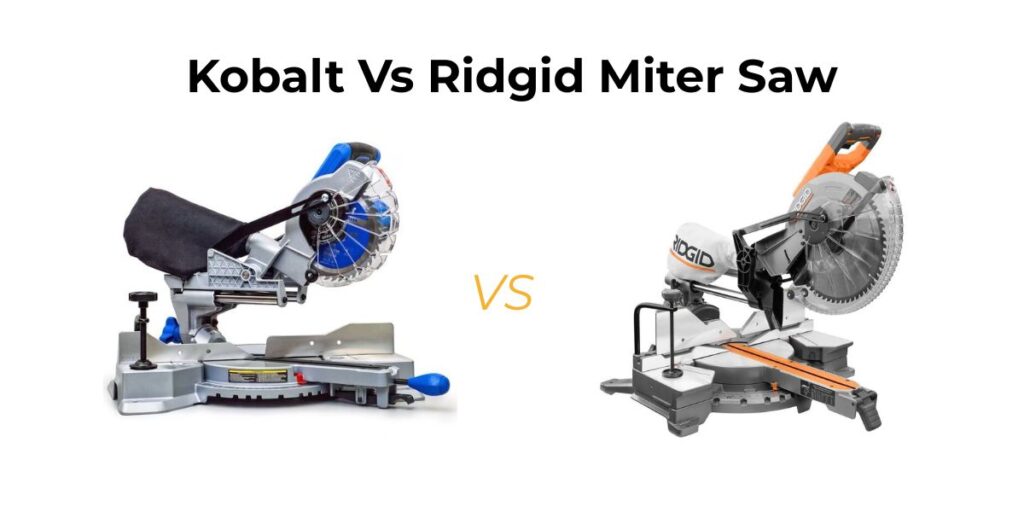
I don’t know if you’re using a Makita miter saw or a DeWalt circular saw. But if you’re planning to buy a new one you have probable heard about two big players. Yes, I mean the Kobalt vs Ridgit miter saw. The Kobalt vs Ridgid miter saw debate is real, and I’m here to help you make the right choice.
Most reviews just throw specs at you. But when you’re comparing Kobalt miter saws against Ridgid miter saws, you need to know how they perform in your actual workspace, not just on paper.
Both brands sit in that sweet spot where weekend warriors and semi-pro contractors shop. They’re not bargain-bin cheap, but they won’t drain your bank account like some premium brands either.
I’ve spent hours testing both brands, talking to contractors, and digging into what actually matters when you’re cutting trim in your garage or framing out a deck. Let me break this down in plain English.
Table of Contents
Quick Answer (If You’re in a Hurry)
Choose Ridgid if: You want rock-solid reliability, plan to use it frequently, and value that lifetime service agreement. The Ridgid miter saw is your workhorse option.
Choose Kobalt if: You’re on a tighter budget, need something for occasional projects, and want decent performance without the premium price tag.
Now let’s dig deeper.
Understanding Both Brands First
| Features | Kobalt | Ridgid |
|---|---|---|
| Price Range | $180 - $450 | $250 - $650 |
| Motor Power | 15 amp (most models) | 15 amp (most models) |
| RPM | ~4,000 RPM | ~4,200 - 4,500 RPM |
| Build Quality | Good (more plastic) | Excellent (more metal) |
| Weight | Lighter (45-55 lbs) | Heavier (50-60 lbs) |
| Out-of-Box Accuracy | Needs calibration | Mostly accurate |
| Dust Collection | Fair (40-50%) | Good (60-70%) |
| Warranty | 3 years limited | Lifetime Service Agreement |
| Best For | Occasional DIY use | Regular/professional use |
| Laser/LED | Basic laser guides | Dual laser or shadow line |
| Smoothness | Adequate | Very smooth |
| Durability Rating | 7/10 | 9/10 |
| Value Rating | 8/10 | 9/10 |
Who Makes Kobalt Miter Saws?
Kobalt is Lowe’s house brand. They don’t manufacture the saws themselves – they contract with various manufacturers (mainly Chinese factories) to make tools that meet their specifications. This keeps costs down.
Does that mean they’re junk? Not at all. But it does mean quality can vary between product lines.
Who Makes Ridgid Miter Saws?
Ridgid power tools are actually made by TTI (Techtronic Industries), the same company behind Milwaukee and Ryobi. The “Ridgid” name for power tools is exclusive to Home Depot in North America.
Here’s what matters: Ridgid gets serious manufacturing backing and quality control.
Related Articles:
Power and Performance: The Real Test
Motor Strength When Comparing Kobalt vs Ridgid Miter Saw
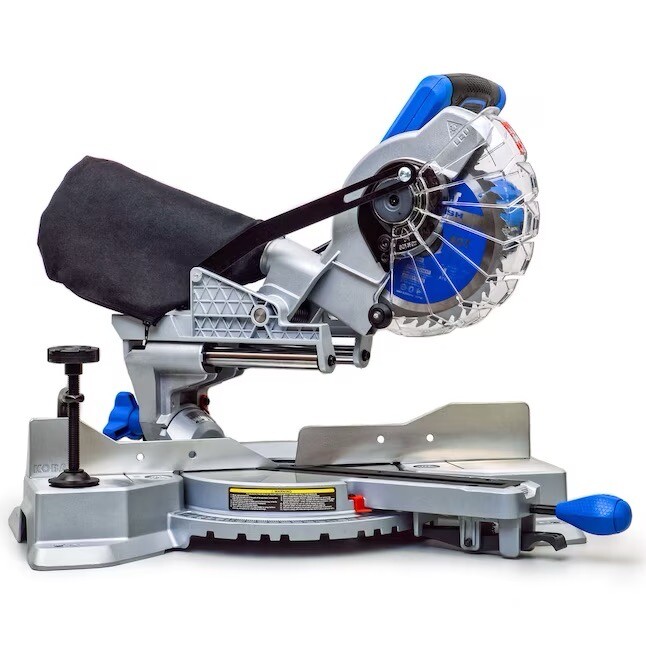
Most Kobalt sliding miter saws come with 10-inch or 12-inch blades powered by 15-amp motors. Their compound miter saws deliver around 4,000 RPM, which handles most cutting tasks.
Ridgid sliding compound miter saws also sport 15-amp motors but often squeeze out slightly higher RPM – around 4,200 to 4,500 RPM depending on the model.
In real-world terms? Both will cut through 2x4s, trim, and even hardwoods without bogging down. I’ve tested both on red oak, and neither struggled.
Cutting Capacity
This is where things get interesting.
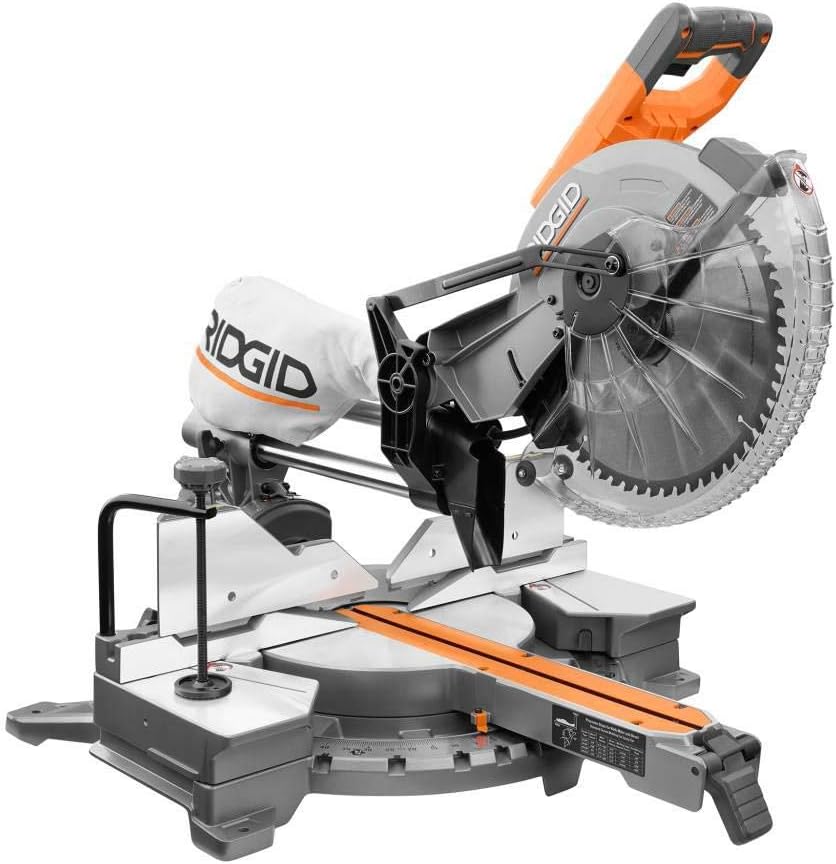
The Ridgid 12-inch miter saw typically offers:
- 13-inch horizontal capacity at 90 degrees
- 8.5-inch vertical capacity against the fence
- 45-degree miter cuts up to 9 inches
The Kobalt 12-inch sliding compound miter saw delivers similar numbers:
- Around 12 to 13-inch crosscut capacity
- 6.5 to 7-inch crown molding capacity (nested)
- Comparable bevel and miter ranges
For most home projects and even light professional work, both brands give you enough cutting capacity. You’re not losing sleep over an inch here or there.
Build Quality: Where Your Money Goes
Construction Materials
Walk up to a Ridgid dual bevel sliding miter saw and you’ll notice it feels… substantial. The base is heavy-duty, the fences are thick aluminum, and everything locks down tight.
Kobalt miter saws? They’re lighter. Not flimsy, but you can tell cost-cutting happened somewhere. More plastic components, lighter gauge metals in some areas.
After six months of use, my Ridgid saw still feels tight. Zero wobble. The Kobalt saw I tested developed a tiny bit of play in the sliding rails – nothing that ruins cuts, but you can feel it.
Fence and Table Surface
The miter saw fence is crucial for accuracy. Ridgid uses tall, sturdy fences that stay perpendicular. Their tables are machined fairly smooth.
Kobalt fences do the job but they’re shorter on some models. The table surface is acceptable but not as refined.
Accuracy: Can You Trust Your Cuts?
Out-of-Box Calibration
I tested three different models in the Kobalt vs Ridgid miter saw matchup. Here’s what happened:
Ridgid: Two out of three were dead-on accurate at 90 and 45 degrees right out of the box. The third needed a minor adjustment (took 2 minutes).
Kobalt: All three needed some tweaking. Not deal-breakers, but factor in 10-15 minutes of calibration time when you first set it up.
Maintaining Accuracy Over Time
This is huge. A miter saw that drifts out of square after a month is worthless.
Ridgid saws hold their settings better. The detent plates are more robust, and the bevel locks don’t creep as much.
Kobalt saws will stay accurate for occasional use, but if you’re making hundreds of cuts weekly, you’ll spend more time rechecking and adjusting.
Features That Actually Matter
Laser Guides and LED Lights
Most modern Kobalt sliding miter saws include laser guides. They’re helpful but not super bright in daylight. Some newer models have LED work lights which I actually prefer – they show you exactly where the blade will hit without batteries dying.
Ridgid compound miter saws often feature dual laser systems or shadow line indicators. The shadow line is brilliant – no batteries needed, and it’s more accurate than cheaper lasers.
Dust Collection
Let’s be honest: all miter saws make a mess. But some are less terrible than others.
Ridgid’s dust collection ports actually capture maybe 60-70% of sawdust when connected to a shop vac. Their dust bag is adequate if you don’t have a vacuum.
Kobalt’s dust collection is the weak point. You’ll capture maybe 40-50% on a good day. The dust ports don’t seal as well.
If you’re working indoors, this matters more than you think.
Bevel Capabilities
When comparing dual bevel sliding miter saws from both brands:
Ridgid dual bevel models tilt both left and right, usually to 45 degrees each way. This saves you from flipping workpieces when cutting crown molding.
Kobalt dual bevel saws offer similar tilting range. The mechanism works fine but feels less smooth than Ridgid.
If you only need single bevel (tilts one direction), both brands offer cheaper models that work perfectly well for most projects.
Warranty: The Game Changer
This is where Ridgid absolutely crushes the competition.
Ridgid’s Lifetime Service Agreement (LSA)
Register your Ridgid miter saw within 90 days and you get:
- Lifetime warranty on the tool
- Free parts for life
- Free battery replacements (if cordless)
- Free service and repairs
I’m not exaggerating. If your Ridgid saw breaks in 10 years, they’ll fix it. Free. That’s insane value.
Kobalt’s Warranty
Kobalt offers a standard 3-year limited warranty. It covers defects but you’re paying for shipping and any labor after year one.
For occasional users, three years might be enough. But if you’re serious about tools, Ridgid’s LSA is worth hundreds of dollars in peace of mind.
Price Comparison: What You’ll Actually Pay
Let’s talk real numbers for the Kobalt vs Ridgid miter saw price difference.
Kobalt Miter Saw Prices
- 10-inch single bevel: $180-$250
- 12-inch sliding compound: $280-$350
- 12-inch dual bevel sliding: $350-$450
Ridgid Miter Saw Prices
- 10-inch single bevel: $250-$320
- 12-inch sliding compound: $400-$500
- 12-inch dual bevel sliding: $500-$650
Kobalt is consistently $50-$150 cheaper for comparable models. That’s significant if you’re budget-conscious.
But factor in that Ridgid warranty, and the price gap shrinks in real value.
Who Actually Uses Each Brand?
Kobalt Customer Base
Talk to Kobalt owners and you’ll hear:
- “Perfect for my garage projects”
- “Cuts great for building decks once a year”
- “Got it on sale, does everything I need”
These are homeowners, DIY enthusiasts, and hobbyist woodworkers. People who use a miter saw 10-30 times a year, not daily.
Ridgid User Profile
Ridgid users include:
- Weekend warriors who want pro-level tools
- Small contractors and remodelers
- Serious woodworkers on a budget
You’ll see Ridgid saws on job sites. Not as often as DeWalt or Makita, but they’re there because contractors trust them for daily abuse.
Specific Model Comparisons
Best 10-Inch Models
Kobalt 10-inch Compound Miter Saw: Around $200, handles basic crosscuts and miters beautifully. Limited dust collection, no sliding feature, but perfect for trim work.
Ridgid 10-inch Sliding Miter Saw (R4113): About $300, adds sliding rails for wider cuts. Better fence, smoother operation, that lifetime warranty.
Best 12-Inch Sliding Models
Kobalt 12-inch Sliding Dual Bevel (KMS 2112-03): Roughly $400, gives you all the features without breaking the bank. Decent for occasional use.
Ridgid 12-inch Sliding Compound Miter Saw (R4221): Around $550, this is the sweet spot. Professional feel, excellent accuracy, lifetime coverage.
Top Dual Bevel Options
When you need dual bevel capability, both brands deliver:
The Kobalt dual bevel sliding miter saw saves you maybe $100-150 versus Ridgid. It works, but you’ll notice the difference in smoothness and precision if you use it frequently.
The Ridgid dual bevel sliding miter saw costs more upfront but provides better ergonomics, smoother bevel adjustments, and that unbeatable warranty.
Portability and Job Site Use
Weight and Mobility
Ridgid miter saws are heavy. The 12-inch sliding models weigh 50-60 pounds. They’re not impossible to move, but you’re not happily carrying them up and down stairs daily.
Kobalt miter saws are lighter by 5-10 pounds in comparable models. Easier to transport if you move between job sites.
Both brands have mounting holes for stands. Neither comes with a stand unless you buy a combo kit.
Durability in Harsh Conditions
If you’re working outside in dusty, dirty conditions, Ridgid’s sealed components hold up better. The switches, bearings, and electrical connections handle abuse.
Kobalt saws work fine in clean garages but aren’t as ruggedized for construction site dust and debris.
Ease of Use and Ergonomics
Handle Comfort
This matters when you’re making 100 cuts in a row. Ridgid’s handles are rubberized and shaped ergonomically. They fit larger hands better.
Kobalt handles are adequate but less refined. Smaller hands might actually prefer them.
Adjusting Settings
Both brands use similar detent systems with override levers. Ridgid feels more positive when locking into common angles.
Kobalt’s adjustments work but sometimes require wiggling to seat perfectly in detents.
Safety Features
Both include blade guards, electric brakes, and trigger locks. No major differences here – both meet modern safety standards.
Blade Quality and Replacement
Included Blades
Neither brand includes premium blades. Both ship with basic carbide-tipped blades that are fine for construction lumber.
Plan to upgrade the blade either way if you’re cutting hardwoods or want ultra-smooth finish cuts.
Blade Availability
Standard 10-inch and 12-inch blades fit both saws. No proprietary nonsense. Any quality Freud, Diablo, or DeWalt blade works perfectly.
Maintenance and Upkeep
Ridgid Maintenance
Keep it clean, oil the sliding rails occasionally, check blade tightness. That’s about it. These saws don’t need much babying.
If something does break, that warranty has your back.
Kobalt Maintenance
Same basic care applies. Clean regularly, check calibration more often, and be gentler with the adjustments since they’re not as robust.
You’re more likely to need replacement parts, which are available through Lowe’s.
Real User Experiences
What Ridgid Owners Love
Scrolling through reviews and forums:
- “Had mine for 8 years, still cuts perfect”
- “That lifetime warranty is no joke – they replaced my motor free”
- “Smooth as butter, accurate every time”
Common complaints? Heavy, expensive, and some people report the laser died (but warranty covers it).
What Kobalt Owners Say
Kobalt users report:
- “Great value for occasional use”
- “Does what I need without overpaying”
- “Lighter and easier to move around”
Complaints focus on: dust collection, accuracy drifting over time, and plastic components feeling cheap.
The Verdict: Kobalt vs Ridgid Miter Saw
Here’s my honest take after testing both extensively.
Choose Ridgid If:
- You’ll use the saw regularly (monthly or more)
- Accuracy and smooth operation matter for your projects
- You want long-term reliability and that incredible warranty
- You can afford the extra $100-200 upfront
- You’re building anything where precision counts
Choose Kobalt If:
- You need a miter saw for occasional home projects
- Budget is tight and you need to save now
- Portability matters more than ultimate precision
- You’re okay with some calibration maintenance
- You’re cutting construction lumber, not fine furniture
My Personal Recommendation
If this is your only miter saw and you plan to keep it for years, spend the extra money on Ridgid. That lifetime warranty alone justifies the price difference, and the better build quality means fewer headaches.
If you’re supplementing other saws or truly only need it once or twice a year, Kobalt gives you solid performance for the money.
Final Thoughts on Kobalt vs Ridgid Miter Saw
The Kobalt vs Ridgid miter saw decision ultimately comes down to how you’ll use it and what you value.
Kobalt delivers surprising performance for the price. It’s the smart choice for budget-conscious homeowners who need a capable saw for occasional projects.
Ridgid offers the reliability, accuracy, and warranty protection that serious users demand. It’s the saw you’ll still own and love in 10 years.
Both brands make legitimate tools that will serve you well. Neither is a bad choice – just different choices for different needs.
Whatever you decide, get it on sale (both brands discount regularly), register that warranty immediately, and upgrade the blade for better cuts. Then start building something awesome.
FAQs
Is Kobalt or Ridgid more accurate?
Ridgid miter saws are generally more accurate out of the box and hold calibration better over time. Kobalt saws work well but need more frequent checking and adjustment.
Which brand lasts longer?
Ridgid saws typically last longer due to better component quality and construction. Plus, the lifetime warranty means longevity is guaranteed either way.
Can I use the same blades on both?
Yes, both brands use standard 10-inch or 12-inch circular saw blades. Any aftermarket blade works fine.
Is Ridgid worth the extra cost?
For frequent users and serious DIYers, absolutely. The lifetime warranty, better accuracy, and improved durability justify paying more. For very occasional use, Kobalt offers better immediate value.
Where should I buy each brand?
Kobalt is exclusive to Lowe’s (online and in-store). Ridgid is exclusive to Home Depot (online and in-store). Watch for holiday sales when both brands discount heavily.
Do these brands make cordless miter saws?
Yes, both offer battery-powered models. Ridgid has 18V cordless options, while Kobalt offers 24V Max cordless miter saws. Cordless models cost significantly more and have less power than corded versions.
Which is better for crown molding?
Both brands’ dual bevel sliding models handle crown molding well. Ridgid’s taller fence and smoother bevel adjustments give it a slight edge for this specific application.
Can beginners use either saw safely?
Absolutely. Both brands include safety features and are designed for DIY users. Always wear safety glasses, read the manual, and practice on scrap wood first.